Interview with Gina Jones- A Barber Specializing In Clients With Special Needs
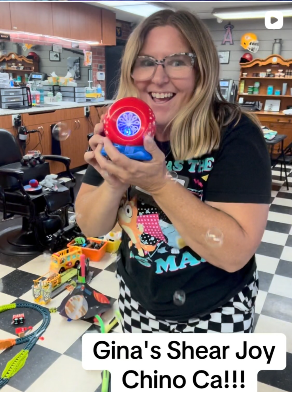
Gina Jones is a Special Needs Barber, previous Behavior Technician, and founder of the Non-Profit “Gina’s Shear Joy Foundation.” In July 2026, she was interviewed about how she found her niche as a Special Needs Barber, and shared strategies and recommendations for families and hair salons giving haircuts to clients with special needs. The interview was conducted via phone, and transcribed and edited by Elyse Mandart, M.Ed. CCC-SLP (founder of “I Can Do This LLC”).
Interview Questions in BLUE and labeled ICDTtools Gina Jones Responses in BLACK labeled Gina Jones
ICDTtools: Please share a little bit about your background. And, how did you find your way to becoming a hairdresser for children with special needs?
Gina Jones: I feel really fortunate to have grown up with a brother who is 10 years older than me and is developmentally delayed. Because of that, I had a unique perspective from a young age - I didn’t see individuals with special needs as different in a negative way. I actually looked up to my brother and his friends. He was very involved in the Special Olympics, and I remember watching him compete and just feeling so proud of him and the other athletes. To me, they were inspiring and honestly just really cool. I think that experience shaped how I see people with developmental differences - it gave me more of a peer-based perspective and made it feel very natural for me to want to work in this community.
As I got older, my brother and I even took a course together in Long Beach, California to become Special Olympics softball coaches. That gave me hands-on experience volunteering and supporting individuals with special needs, and it’s really where I started developing skills in navigating behaviors and building trust.
Around 2005, I got my first job working with a child during recess as a play facilitator. I immediately fell in love with the work and went on to become an ABA therapist, which is what we called it at the time. I ended up putting my cosmetology career on hold so I could fully focus on working with kids in schools and in-home settings.
Everything really came full circle when I was working with a child who needed to be desensitized to haircuts. Even sitting in the chair was a challenge at first. We worked step by step, building tolerance and trust, and when we finally got him through a haircut without major behavioral issues, it was such an emotional moment - we all cried. That experience stayed with me. It made me realize that I could combine my background in behavior therapy with my cosmetology license to fill a real need.
I actually had the idea for years - I even put it on a vision board in 2016 - but I didn’t fully pursue it until 2021. Once I committed, I knew I needed to sharpen my technical skills, so I worked at Supercuts and then at Bill’s Barbershop in Chino, California, where I was really supported in my goal of working with individuals with special needs.
Eventually, I asked [my supervisor] if I could dedicate time to offering specialized haircut sessions, and my first official special-needs haircut day was in April 2023. From there, things grew naturally.
Now, I’ve started a foundation focused on helping children and adults with special needs access not just haircuts, but supportive, therapeutic experiences with trained barbers. We’re currently working on raising funds, building scholarship opportunities, and expanding access for families who need it.
It’s something I’m incredibly passionate about, and I feel lucky to be able to combine both of my backgrounds to make a difference.
ICDTtools: What is your protocol when meeting a client for the first time?
Gina Jones: When they make the appointment, I tell families to bring a change of shirt for after the haircut. If kids get itchy and covered in hair during the haircut they often want to change into a new shirt when it's done.
When they arrive, I take time to talk to the parents so the child can get acclimated to the barbershop. A lot of times the parents want to start the haircut right away, and they don’t realize that it takes time for their child to feel comfortable. I ask parents questions about their child's likes, and what reinforces them.
ICDTtools: What methodologies do you use during the haircut that help children feel engaged, and avoid meltdowns?
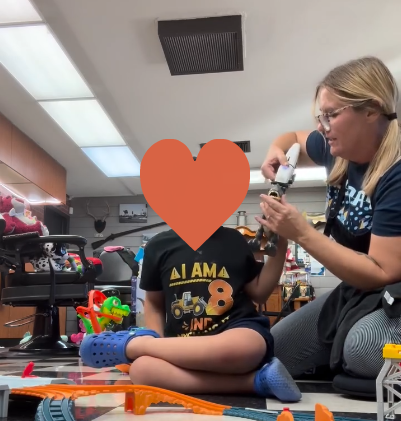
Gina Jones: To get children used to the haircutting tools, I play a game to help desensitize children to the tools. I will have the child and their parents take turns touching and holding the different tools. I’ll say, “OK, it’s Mommy’s turn. She is touching it for 5 seconds,” and then I’ll have a doll do the same, “OK, now the doll is going to hold it for 5 seconds.” This shows the child that it is safe. I try to have the child touch a tool at least 5 times for 5 seconds before I even try to cut their hair with it.
To desensitize kids with the blow-dryer, I show them how it can blow hair like the wind. Sometimes I’ll put race cars on the floor and have them use the blow dryer to blow the race cars. I will also use the blow dryer to keep ping-pong balls up in the air. It turns the blow dryer into something that’s fun. Showing kids that the blow dryer can blow the already cut hair that is on the floor, helps them to understand that the blow dryer can help to blow the hair off of their neck as well.
I give breaks during the haircut. I love using a timer so that kids know how long their break is and they know when their break is up. I also like to do a lot of rapport building. When they are on a break, I’m not just sitting there. I’m on the floor, playing. I’m showing them different toys I think they’ll like. I’m blowing up balloons. I’m being about as silly and fun as possible on their break so that they understand that Miss Gina is their friend. What I’ve noticed is, the less rushed you are, the better the outcome. If you really want to give the kids the best experience, there needs to be time for play, time for breaks, time to get acclimated to the barbershop, and time to get acclimated to who I am.
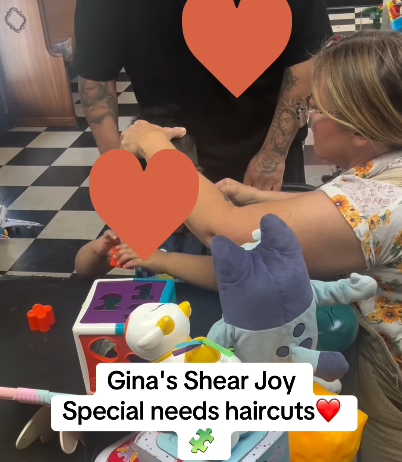
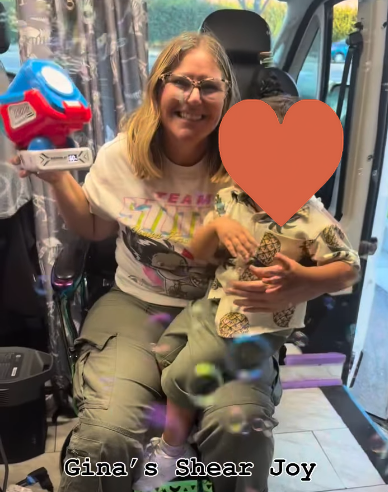
While I am cutting their hair, I have toys, fidgets, bubbles, and balloons in my shop for kids to use. Sometimes kids also like to use tablets to distract themselves with their favorite show or game.
ICDTtools: What are your go-to products for children who are afraid of getting their haircut? Is there a specific style of brush/comb that works best?
Gina Jones: I love “It’s A 10” for long and curly hair. It’s a leave-in conditioner that really makes hair super soft and easy to brush through. A lot of times kids come in with matted hair because it’s hard for their parents to brush the hair through. When kids come in, I get their hair pretty wet, put “It’s A 10” in it, and it makes it so much easier to brush through.
I use The NeuroStandard brush with my clients. It was actually recommended to me by a parent with a child with autism. It has little tiny bristles in between the larger ones so that it grips the hair but doesn’t hurt like a regular brush.
I usually use JLR clippers. They are professional-grade clippers that are quiet and strong enough to cut through the hair quickly. Some other clippers on the market are quiet, but they are too weak. The JLR clippers are very durable - kids have thrown it across the room and it still works! I also recommend these clippers to parents who want to try and cut their child’s hair at home.
I recommend using combs with wider teeth for long and curly hair.
ICDTtools: Do you tend to use just scissors for children who are fearful, or are you able to get children to feel comfortable around the clippers pretty quickly?
Gina Jones: I get them to use the clippers pretty quickly. Believe it or not, a lot of kids actually dislike the scissors more. With scissors, you have to grip the hair to be able to pull it up and cut it. I have found that many kids do not like the pressure of their hair being held. Once I can get kids desensitized to the clippers, they are often very happy to have clipper haircuts over scissor haircuts.
Just today, a child would not let me cut his hair with scissors at all. I held up the scissors and I held up the clippers, and I said, “Which one would you like me to cut your hair with?” and he pointed to the clippers. When he was on break, I put my hand in his hair and lifted it up multiple times to get him used to that feeling so that he wouldn’t get as upset when I do it in the chair. He had let me use scissors in previous haircuts. Kids are like that. They have good days and bad days. One day we can make a lot of progress, and try new things, but then the next time they come in there might be setbacks. It makes your heart sad, of course, but just because they had one difficult haircut doesn't mean they’ve lost all the progress that they’ve made.
ICDTtools: How long does a special needs haircut typically take? And, how many positive haircut experiences does a child typically need before they can come in and get a haircut without fear?
Gina Jones: I would say that it takes about 45 minutes to an hour to give a special needs haircut, including breaks. If a child is doing well, and doesn’t seem upset, I will give them short one minute breaks throughout. If a child is having a rough time, I will give five minute breaks so that they can reset and have some fun before we get started again.
If the parent is consistently bringing their child in for haircuts - like 3 months in a row - by the fourth haircut the child tends to be pretty comfortable with me. But, if parents don’t come in consistently and wait too long between haircuts, then the child regresses and it takes a lot longer to get them comfortable getting haircuts.
ICDTtools: What advice do you have for families who have children who struggle to get a haircut?
Gina Jones: I definitely recommend that families prepare their children with social stories. You and your child can watch social stories online or read a social story book.
For a lot of kids, wearing the salon cape is a really big issue. It’s often one of the last things that I can get the kids to do. It would be very helpful if families had a salon cape at home that they could practice with. Then, they could bring the cape with them, and it would be familiar from practicing at home.
I also want to remind parents that getting their child comfortable with getting a haircut can take time. It takes patience. Please don’t make your child feel bad about being scared.
ICDTtools: What advice do you have for hair stylists and hair salons to help support clients and their families when a child is scared/struggling to get their haircut?
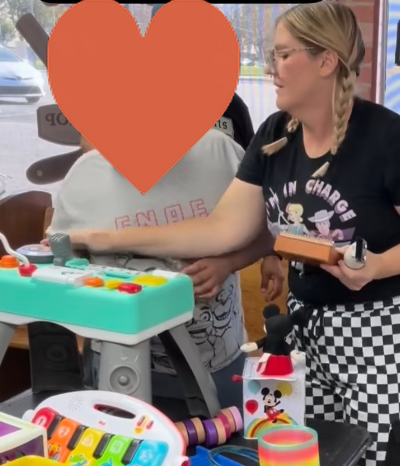
Gina Jones: Given my background in ABA (Applied Behavior Analysis), I love using backwards chaining for haircuts. That means that I work from the end of the haircut backwards to build confidence and success. Typically the first step of a traditional haircut is having the child sit in the salon chair. The second step would typically be putting on a cape. Hair dressers then start cutting from the neck up.
But, I do the haircut backwards. Kids tend to do better when you start on the top of their hair and work your way down, because the neck and ears are very sensitive areas. It is scary for them. When you start cutting at the top of their head and work your way down, you are already building trust by the time you get to the more sensitive areas. When starting the haircut, I let the child move around, and play with toys. I ask them if they would like to put on a cape and I explain to them what the cape is for. But, if they don’t want it, that is fine. I just want them to get used to the haircut. We can work on the cape and salon chair later on. If you try to force a child to sit in the salon chair and put on a cape right away, then the child might already be crying and overwhelmed and you haven’t even gotten started cutting yet.
I always show the child the tool first before I use it. I use my desensitization game to get kids used to the tools. I also tell parents not to force their child to pay attention, I want it to happen more naturally. When parents tell their child, “Johnny, look. Look what Miss Gina is showing you,” it puts pressure on them and starts adding anxiety to the situation. I want the child to just notice what I am doing, and notice what everyone is taking a turn holding. That way they feel like they are in control, and that looking and holding the tool is on their terms.
I want to stress the importance of having patience. If you cannot offer at least an hour for a haircut, then don’t say you offer “sensory inclusive” haircuts. Some hair salons offer “Autism Friendly” haircuts, and then try to squeeze the haircut into a 15-30 minute time slot. They expect the parents to hold their child down to do the haircut really quickly. Their idea is that they are torturing the child less by doing it really fast. But, in reality, this just retraumatizes the child, or builds on the trauma that the child already has. If you’re going to help the special needs community with haircuts, then you need to give them your time and patience.
ICDTtools: Tell us about one of your most challenging cases and how you were able to work towards success with the child and family.
Gina Jones: I had one child come to me when he was around 6 years old. He would scream and try to run away. After around 6 or 7 months of trying, we hadn’t made very much progress. He was still screaming and trying to run away. But, we didn’t give up. One day, he let me get close to him while he was playing with trains. He looked at me coming close with the clippers and he went back to playing. I think that all of the consistent work we had been doing finally clicked and he understood that I was safe, and he was ready to let me cut his hair. I started cutting his hair while he played with the trains. All on his own, he counted down from 10, and when he got to 1, he looked at me to tell me that he needed a break. Even being minimally verbal, he was able to communicate his boundaries with me. His mom and I were so proud of him, and we both started crying that he was getting his haircut! Now, he comes in for a haircut, sits in my chair, wears the salon cape, and gets his haircut - he mastered it!
ICDTtools: Please tell us about your foundation and the work that you are doing to provide free haircuts for children with special needs.
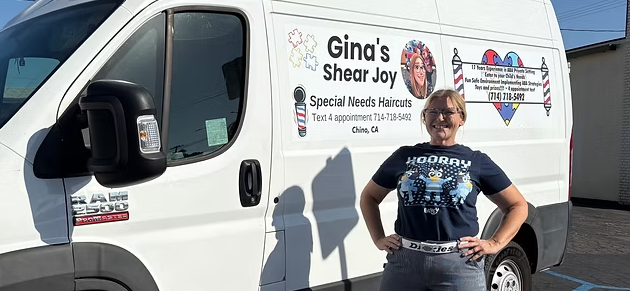
Gina Jones: One of the things that I’ve noticed is that when families are having financial issues, they will skip getting haircuts. But, the children I see need consistency and structure, and skipping a haircut can stunt their progress. I created a foundation called “Shear Joy Foundation” to cover the cost of special needs haircuts for families who cannot afford consistent haircuts. Because the haircut is free, I am taking away a barrier for families to be able to help their child get desensitized to haircuts. I also have a van so that I can drive to families who are unable to bring their child into the shop. I also love to drive my van to community events and give out free haircuts to not only people with special needs, but also people who are homeless.
My haircuts are only $30 for a whole hour. I know that with over 20 years of experience working with children with special needs I could charge more. But, I want to make sure every family can afford to get a haircut.
ICDTtools: Thank you so much for your time and sharing your expertise!
Please consider donating to support Gina’s foundation and mission to provide haircuts to clients with special needs and the homeless!
Gina Jones’ Foundation: https://www.shearjoyfoundation.com/
Contact Gina Jones to donate a haircut to someone in need: Donate@Shearjoyfoundation.com